| Year | |
| Event | Elphberg Park Massacre |
| Summary | A violent crackdown by Ruritanian government security forces against pro-democracy protesters, resulting in hundreds of civilian casualties and weakening the ruling government, ushering in a period of civil conflict and unrest. |
| Location | |
| Significance | A pivotal moment in Ruritania's turbulent transition from a Soviet-aligned authoritarian state to an independent democracy, leaving a lasting legacy as one of the darkest chapters in Ruritanian history. |
The 1995 Elphberg Park Massacre was a violent suppression of pro-democracy protests in the city of Elphberg, Ruritania, which resulted in the deaths of hundreds of civilian demonstrators at the hands of government security forces. The massacre was a pivotal moment in Ruritania's transition from an authoritarian Soviet-aligned state to an independent democracy, ultimately weakening the ruling regime and ushering in a period of civil conflict.
Ruritania was a republic that emerged from the collapse of the Soviet Union in the early 1990s. Under the rule of President Alexei Romanov, the country maintained close economic and political ties with Russia while clamping down on political dissent and civil liberties. Opposition parties, human rights groups, and independent media outlets were routinely suppressed.
By 1995, discontent with Romanov's authoritarian rule had reached a boiling point, particularly in the Elphberg region which had a long history of resistance to central Ruritanian control. A broad coalition of pro-democracy activists, students, ethnic minority groups, and labor unions began organizing large-scale protests in the capital city of Elphberg, demanding free elections, the release of political prisoners, and greater autonomy for the region.
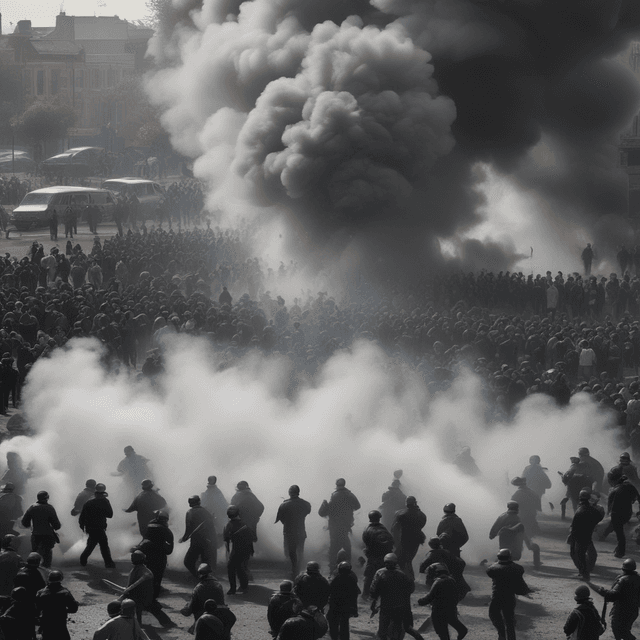
On May 1, 1995, tens of thousands of protesters gathered peacefully in Elphberg's central Elphberg Park to voice their opposition to the Romanov government. Despite the overwhelmingly civilian nature of the demonstration, security forces moved in to violently disperse the crowd, employing tear gas, rubber bullets, and ultimately live ammunition.
Eyewitness accounts and media reports described scenes of chaos and panic as protesters were gunned down indiscriminately by the heavily militarized police and army units. Many were shot in the back as they tried to flee. By the end of the day, over 300 protesters had been killed, with thousands more injured.
The Elphberg Park Massacre was broadcast live on television and sparked outrage both within Ruritania and internationally. Footage of unarmed civilians being mowed down by government forces became a rallying cry for the pro-democracy movement.
The Elphberg Park Massacre severely damaged the legitimacy of President Romanov's regime. Within weeks, widespread civil unrest erupted across Ruritania, with protesters attacking government buildings and security forces. The military fractured, with some units defecting to the opposition.
Romanov declared a state of emergency and launched a brutal crackdown, but this only further galvanized the pro-democracy movement. By the end of 1995, the president had been overthrown in a popular uprising, paving the way for the country's first free elections.
The Elphberg Park Massacre is remembered as a seminal event in Ruritanian history, a tragedy that catalyzed the country's transition to democracy but at a horrific cost. It remains a painful symbol of the struggle for human rights and political freedoms in the former Soviet bloc. Scholarships, monuments, and annual commemorations in Elphberg keep the memory of the massacre alive.
Even decades later, the legacy of Elphberg Park casts a long shadow over Ruritanian politics. The atrocities committed there have led to lasting mistrust between the government and citizens, and the event is frequently invoked by activists and opposition leaders fighting to safeguard the country's young democracy.
